

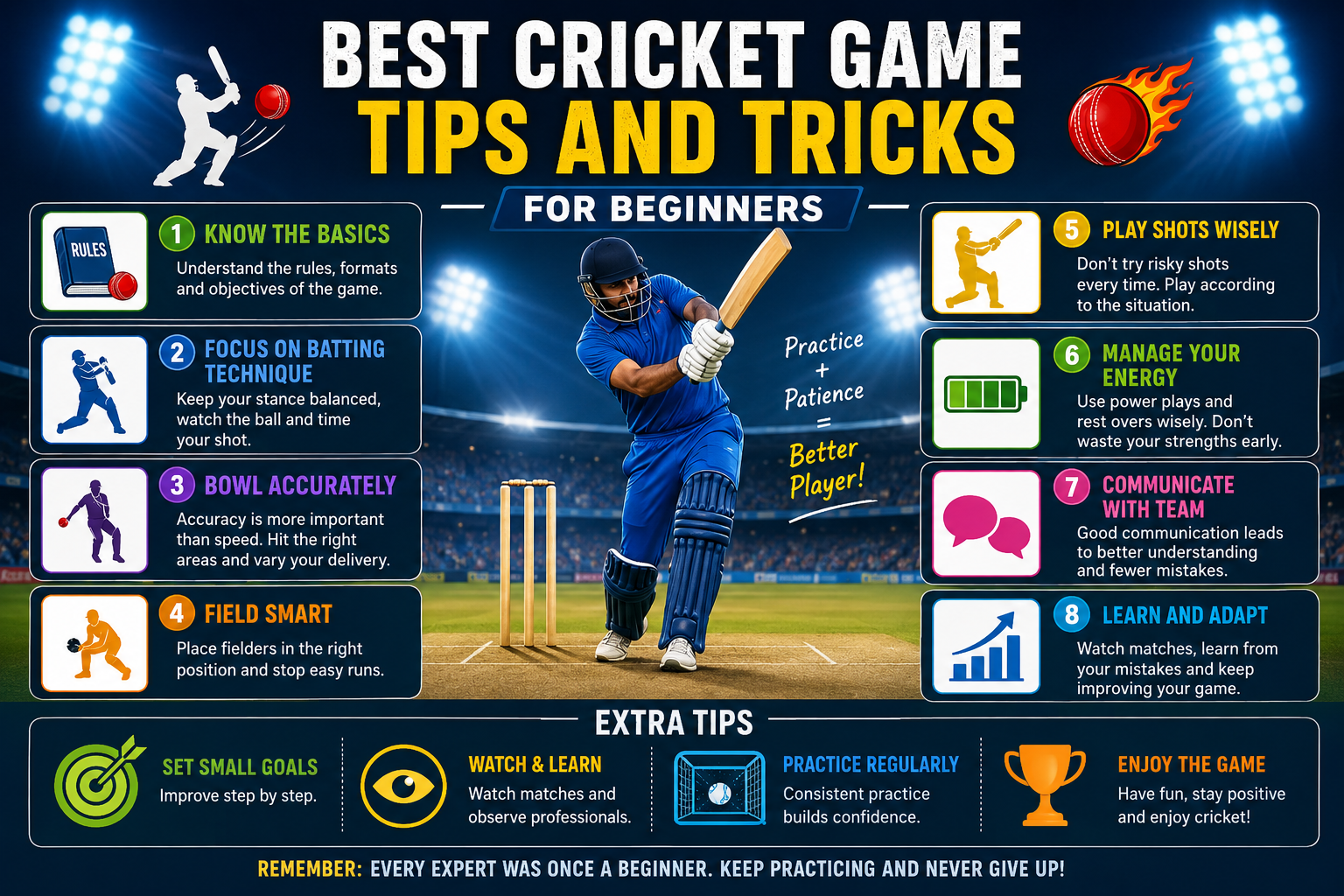
Cricket is often called a gentleman’s game, but don’t let the polite nickname fool you — it is one of the most technically demanding and mentally challenging sports in the world. Whether you’re picking up a bat for the very first time, joining a local club, or simply trying to understand the game better before your next backyard match, learning the fundamentals the right way from day one will save you years of bad habits.
This guide is built specifically for beginners looking to understand every part of the cricket game. We’ll walk through everything from grip and stance to bowling variations, fielding drills, fitness routines, mental preparation, and even the unwritten etiquette of the sport. By the end, you’ll have a clear roadmap for how to start your cricket journey the smart way.
Why Learning the Basics Properly Matters
Many beginners rush straight into hitting big shots or bowling as fast as possible without understanding the fundamentals. This might feel exciting in the short term, but it almost always leads to technical flaws that become hard to fix later. Coaches often say that the first six months of a cricketer’s development matter more than the next six years, because that’s when muscle memory is formed.
Think of the cricket game like building a house. The stance, grip, and basic movements are your foundation. If that foundation is shaky, everything you build on top of it — power hitting, spin bowling, sharp fielding — will eventually crack under pressure. So before we get into flashy tips and tricks, let’s start with the essentials.
Part 1: Batting Tips for Beginners
1. Master Your Grip First
Your grip is the very first thing a coach checks, and for good reason — it influences everything else, from bat swing to shot control. Hold the bat with both hands close together, with the “V” formed by your thumb and index finger on both hands aligned roughly down the back of the bat’s spine. A grip that’s too tight restricts your wrists; too loose and you lose control on impact. Aim for a relaxed but firm hold, similar to how you’d hold a hammer you plan to use accurately, not smash with.
2. Get Your Stance Right
A good batting stance is balanced, comfortable, and repeatable. Stand side-on to the bowler, feet shoulder-width apart, knees slightly bent, and weight evenly distributed on the balls of your feet. Your head should be still and level, eyes looking straight down the pitch toward the bowler. Avoid stances that are too open or too closed, as these can restrict your ability to play both off-side and leg-side shots effectively.
A simple beginner trick: practice your stance in front of a mirror. It sounds basic, but seeing your own posture helps you notice imbalances you can’t feel while playing.
3. Watch the Ball, Not the Bowler’s Run-Up
New batters often get mesmerized by a bowler’s run-up or arm action and lose focus right when the ball is released. The golden rule in batting is simple: watch the ball from the bowler’s hand all the way to the bat. This single habit alone will drastically improve your shot selection and timing.
4. Play Straight Before Playing Fancy
It’s tempting to try cross-batted slogs and reverse sweeps after watching highlight reels of professional players. But for beginners, playing “straight” — meaning keeping the bat close to the pad and swinging in a vertical arc — is the safest and most effective way to build a solid technique. Straight shots like the forward defense, straight drive, and cover drive form the backbone of good batting and reduce the risk of getting out to catches or bowled deliveries.
5. Footwork Is Everything
Good batting isn’t just about hand-eye coordination; it’s about getting your feet into the right position before the ball arrives. Practice moving your front foot toward the pitch of the ball for drives, and your back foot for cuts and pulls. Beginners should specifically drill:
- Front-foot defense
- Back-foot defense
- Forward press movement
- Quick backward shuffle for short deliveries
Footwork drills without a ball, just shadow practicing movements, can be done daily at home and make a noticeable difference within a few weeks.
6. Learn to Leave the Ball
One of the most underrated skills in batting is knowing when not to play a shot. Beginners often try to hit every ball, which leads to unnecessary risks. Learning to judge line and length well enough to leave deliveries outside off stump is a mark of a maturing batter.
7. Practice Running Between the Wickets
Running between the wickets wins matches, yet it’s one of the most neglected skills among beginners. Practice calling clearly (“Yes,” “No,” “Wait”), backing up at the non-striker’s end, and turning quickly for twos. A simple tip: always run the first run hard, and only then assess whether a second is on.
8. Use Soft Hands Against Fast Bowling
Against pace, beginners often grip the bat too tightly, causing the ball to fly off the bat into close catching positions. Instead, use “soft hands” — relax your grip slightly on impact — to reduce the pace of the ball off the bat and avoid easy catches to slip or gully.
Part 2: Bowling Tips for Beginners
1. Focus on Line and Length Before Pace or Spin
Every young bowler dreams of bowling 140 km/h yorkers or unplayable googlies, but consistent line and length wins more matches than raw pace or spin ever will. Beginners should aim to bowl a consistent line (ideally around off-stump) and a good length (not too short, not too full) before attempting variations.
A great training tool: place a target — like a cone or a marked circle — on a good length spot and try to hit it repeatedly. Consistency here builds the foundation for everything else.
2. Nail Your Run-Up Rhythm
A smooth, repeatable run-up sets up a strong delivery. Beginners often either sprint in erratically or shuffle in too slowly, both of which affect balance at the crease. Start with a shorter run-up (around 8-12 steps for pace bowlers) and gradually extend it as your rhythm improves. The key is consistency in your stride pattern every single time.
3. Get Your Front Arm and Wrist Position Right
For pace bowlers, the front arm (non-bowling arm) acts like a guide, pointing toward the target and helping generate power through the shoulder rotation. For spinners, wrist position at release determines the amount of turn you get. Beginners should spend time in front of a mirror or record themselves bowling to check these positions.
4. Learn the Basic Deliveries First
Before experimenting with doosras, googlies, or slower-ball variations, master the basics:
- Pace bowlers: the standard outswinger and inswinger, bowled off a consistent seam position
- Spin bowlers: the standard off-break or leg-break, bowled with a repeatable release
Once these are consistent, you can start layering in variations like the slower ball, yorker, or the doosra.
5. Use the Crease Smartly
Beginners often bowl from the same spot on the crease every single delivery, making them predictable. As you progress, learn to bowl from wide of the crease or close to the stumps to change the angle of attack — a subtle trick that can deceive batters without needing extra pace or spin.
6. Build Your Fitness for Bowling Endurance
Bowling is physically demanding, especially on the lower back, shoulders, and knees. Beginners should incorporate:
- Core strengthening exercises
- Shoulder mobility drills
- Leg strength training (squats, lunges)
This not only improves performance but significantly reduces the risk of common cricket injuries like stress fractures and shoulder strain.
Part 3: Fielding Tips for Beginners
Fielding is often the most neglected skill among beginners, yet it can single-handedly change the outcome of a match. Here are the essential fielding tips every beginner should know.
1. Master the Basic Catching Stance
Stand with knees slightly bent, hands relaxed in front of your body, and eyes focused on the ball. When catching, always try to “give” with the ball — slightly retract your hands upon contact to absorb the impact rather than catching with stiff arms.
2. Learn to Judge the Ball Early
Good fielders read the trajectory of the ball almost instantly after it leaves the bat. Beginners can practice this with simple catching drills using a tennis ball against a wall, gradually increasing the pace and distance.
3. Practice Ground Fielding Fundamentals
For ground balls, the “long barrier” technique — getting down low with one knee blocking the ball from going past you — is essential for beginners fielding on the boundary. For infield ground fielding, practice picking up the ball cleanly with both hands and transferring quickly into a throw.
4. Work on Your Throwing Accuracy
A strong, accurate throw to the stumps or the wicketkeeper can save crucial runs. Beginners should focus on throwing accuracy over sheer power initially, practicing target throws at a single stump from various distances.
5. Stay Alert Between Deliveries
One of the biggest mistakes beginners make is mentally switching off between deliveries. Good fielders stay in a “ready position,” anticipating where the ball might come, even when it’s not directly hit toward them.
Part 4: Wicketkeeping Basics (If You’re Trying This Role)
If you’re stepping into wicketkeeping as a beginner, here are a few quick tips:
- Keep a low, athletic stance behind the stumps with your weight on the balls of your feet
- Watch the ball off the bat, not the bowler’s hand, once play begins
- Practice “giving” with your gloves on impact to avoid dropped catches
- Work on quick stumping reflexes through repetitive drills with a coach or partner
Wicketkeeping requires sharp reflexes and constant focus, so beginners should be patient — this is a skill that takes time to develop confidence in.
Part 5: Understanding the Rules and Game Sense
Beyond the physical skills, understanding the basic rules and situational awareness of cricket will make you a smarter player.
Know the Basic Formats
Cricket is played in several formats — Test matches, One Day Internationals (ODIs), and Twenty20 (T20). As a beginner, you’ll likely start with shorter formats like T20 or even more condensed versions in club or school cricket. Understanding the format you’re playing helps you adjust your strategy — for example, T20 rewards aggressive batting and tight bowling economy, while longer formats reward patience and technique.
Understand Field Placements
Learning basic field positions — slip, gully, point, cover, mid-on, mid-off, square leg, fine leg — helps you understand where the gaps are as a batter and where to aim your shots. As a fielder, understanding these positions helps you anticipate where the ball is likely to come.
Learn Basic Match Situations
Beginners should start paying attention to simple game-reading skills:
- When to play defensively versus aggressively based on the match situation
- How required run rate affects batting approach in limited-overs cricket
- When bowlers typically bowl variations (e.g., yorkers at the death overs)
This “cricket IQ” develops naturally with experience, but actively thinking about these situations while watching or playing matches speeds up the learning curve significantly.
Part 6: Fitness and Physical Preparation
Cricket might not look as physically intense as sports like football or basketball, but it demands a unique combination of strength, agility, endurance, and quick bursts of speed.
Cardiovascular Fitness
Since matches can last for hours, building base-level cardiovascular endurance through jogging, cycling, or swimming helps beginners maintain energy and focus throughout a game.
Strength Training
Basic strength training focusing on the core, legs, and shoulders improves both batting power and bowling speed while reducing injury risk. Beginners don’t need to hit the gym intensely — bodyweight exercises like push-ups, squats, planks, and lunges are a great starting point.
Agility and Reflexes
Quick reflexes are essential for fielding and batting against fast bowling. Ladder drills, cone drills, and reaction-ball exercises are excellent tools for improving agility as a beginner.
Flexibility and Injury Prevention
Cricket involves a lot of twisting, turning, and sudden movements. A proper warm-up routine involving dynamic stretches before playing, and static stretches afterward, significantly reduces the risk of common injuries like hamstring strains and shoulder issues.
Part 7: Mental Tips and Tricks for Beginners
Cricket is as much a mental game as it is physical, and this is often the most overlooked area for beginners.
1. Stay Present, Ball by Ball
One of the toughest mental skills in cricket is staying focused on just the next ball, rather than worrying about a previous mistake or the overall match situation. Developing a simple pre-ball routine — like adjusting your gloves or taking a deep breath — can help reset your focus before each delivery.
2. Don’t Fear Failure
Cricket is a game of failure more than success — even the best batters in the world average getting out far more often than scoring big. Beginners should embrace mistakes as part of the learning process rather than becoming discouraged by them.
3. Set Small, Achievable Goals
Instead of focusing on big outcomes like “scoring a century,” beginners should set small technical goals for each net session or match — like “watch the ball closely” or “hit the top of off-stump five times in a row.” These micro-goals build confidence and technique simultaneously.
4. Learn from Watching Professional Cricket
Watching professional matches with an analytical eye — observing how top players set their stance, judge length, or set fields — is a free and effective way to accelerate your learning. Try picking one skill to focus on each time you watch a match, rather than just watching passively.
5. Build Match Temperament
Handling pressure situations calmly is a skill that separates good cricketers from great ones. Beginners can practice this by simulating pressure in training — for example, setting a target of scoring a certain number of runs in a limited number of balls during net sessions.
Part 8: Common Mistakes Beginners Should Avoid
Let’s quickly summarize some of the most common mistakes new cricketers make, so you can consciously avoid them:
- Gripping the bat too tightly, which restricts fluid shot-making
- Playing across the line instead of with a straight bat
- Bowling without a consistent run-up rhythm, leading to inconsistent line and length
- Ball-watching instead of anticipating while fielding
- Neglecting fitness and flexibility training, increasing injury risk
- Focusing only on batting or bowling while ignoring fielding and fitness
- Trying advanced techniques too early, before mastering the basics
- Getting mentally rattled after a mistake, instead of resetting focus for the next ball
Part 9: Essential Gear for Beginners
Having the right gear not only protects you but also helps build confidence as you learn the game. Beginners should invest in:
- A correctly sized bat (not too heavy, based on your height and strength)
- Batting pads and gloves
- A helmet, especially when facing fast bowling
- An abdominal guard (box) for protection
- Proper cricket shoes with good grip for both batting and fielding
- A well-fitted thigh guard, particularly useful against pace bowling
It’s worth visiting a local sports store or consulting a coach to get correctly fitted gear rather than guessing sizes, especially for the bat, which significantly affects your shot-making ability.
Part 10: Practice Drills You Can Do at Home
You don’t always need a full cricket ground to improve your skills. Here are a few simple drills beginners can do at home or in a small backyard:
- Shadow Batting: Practice your stance, backlift, and shot execution in front of a mirror without a ball.
- Wall Ball Catching: Throw a tennis ball against a wall and practice catching it at different heights and angles.
- Cone Bowling Targets: Set up cones or markers on a good length and practice hitting them repeatedly with a tennis ball.
- Reaction Ball Drills: Use a reaction ball (an irregularly shaped ball) to sharpen your reflexes for both batting and fielding.
- Balance Drills: Practice standing on one leg or performing slow lunges to build the stability needed for both batting and bowling.
These simple, low-equipment drills can be done multiple times a week and will noticeably improve your coordination and technique over time.
Final Thoughts: Enjoy the Learning Process
Cricket is a sport that rewards patience, both on the field and in your development as a player. It’s easy to feel discouraged when you’re just starting out — missing straightforward catches, getting bowled by simple deliveries, or struggling with basic footwork. But every professional cricketer went through this exact same learning curve.
The key for beginners is consistency: showing up to practice regularly, focusing on fundamentals before flashy techniques, staying physically fit, and developing the mental resilience to handle both success and failure gracefully. Cricket isn’t just a game you play with your hands and feet — it’s a game you play with your mind, patience, and character.
Whether your goal is to play competitively, join a local club, or simply enjoy casual matches with friends, these beginner tips and tricks will give you a strong foundation to build upon. Take your time, trust the process, and most importantly — enjoy every step of your cricket journey.