

Introduction
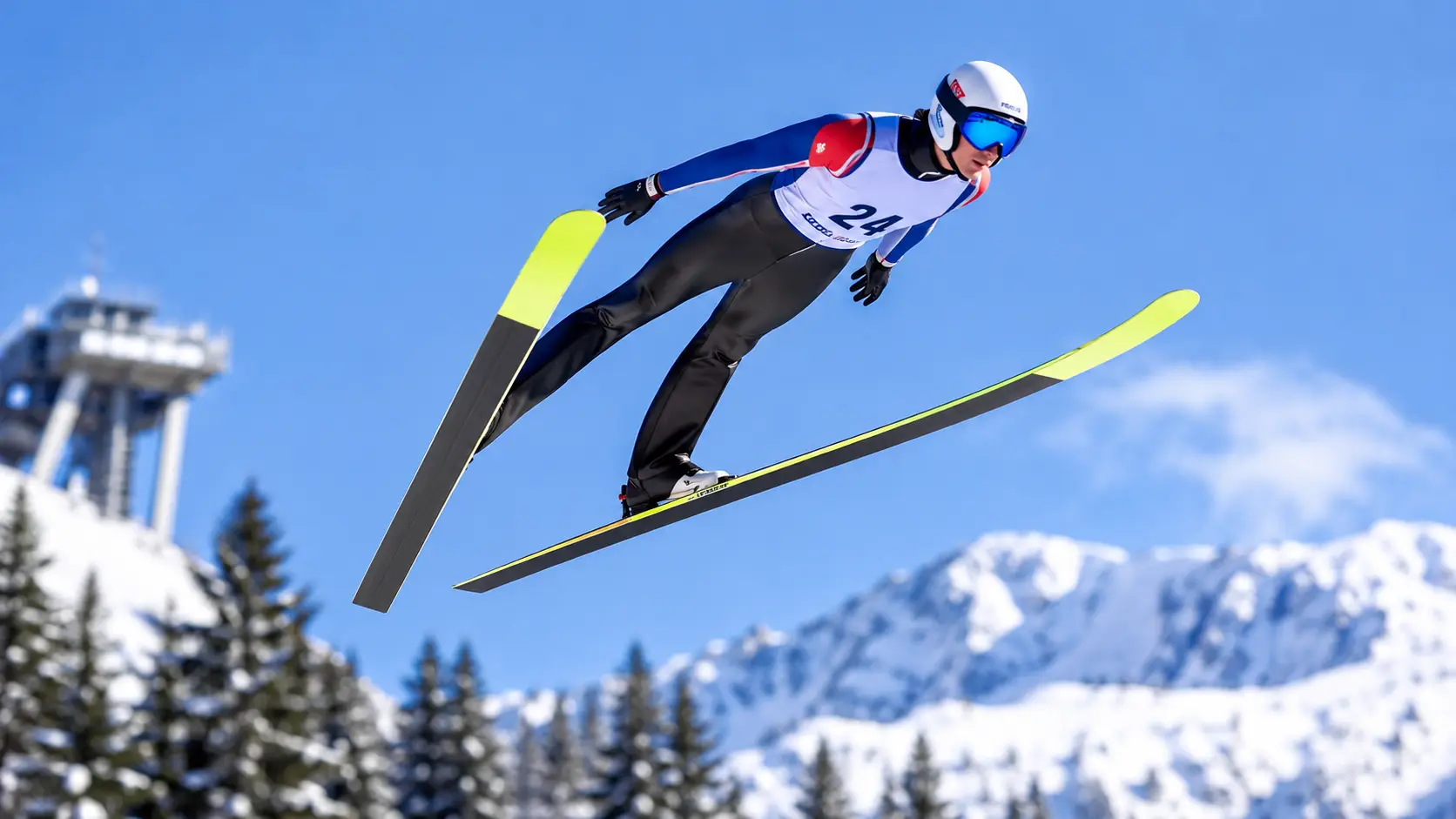
Watching a ski jumping competition can feel like watching humans fly. Athletes travel down a steep snowy ramp at high speed, launch themselves into the air, and glide over a long distance before landing smoothly on a specially designed slope. Their flights look almost effortless, but every movement requires years of practice and careful control.
Many people wonder how ski jumpers can remain in the air for several seconds without wings, engines, or any other flying equipment. The answer involves physics, aerodynamics, body position, speed, and athletic ability.
Ski jumpers do not simply leap into the air and hope to travel far. They use the speed they develop on the in-run, perform a powerful takeoff, and position their bodies and skis to generate aerodynamic lift. This lift helps slow their descent and allows them to cover a greater horizontal distance.
Their training is equally important. Professional athletes develop explosive leg strength, balance, flexibility, coordination, and mental focus. They also spend considerable time practising their takeoff, flight position, and landing techniques.
If you have ever asked how is it possible for ski jumpers to stay in the air so long and how do they train for that, this article explains the science behind their flights and the training methods that help them perform at such a high level.
1. Understanding the Sport of Ski Jumping
Ski jumping is a winter sport in which athletes travel down a specially constructed ramp before launching themselves into the air. Their objective is to achieve a long, controlled jump and land safely on a prepared slope.
Unlike ordinary skiing, where athletes mainly move along the snow, ski jumping involves an extended airborne phase.
A ski jumping hill contains several important sections:
- In-run: The track where athletes build speed before takeoff.
- Takeoff table: The area where athletes push away from the ramp.
- Flight zone: The section where athletes travel through the air.
- Landing slope: The downhill surface where athletes land.
- Outrun: The area where athletes slow down after landing.
Every section contributes to the final performance.
Athletes must maintain the correct position during the in-run, time their takeoff accurately, control their bodies during flight, and prepare for a balanced landing.
Ski jumping is therefore not just about jumping as far as possible. It requires a combination of physical strength, technical skill, aerodynamic understanding, and concentration.
2. How Is It Possible for Ski Jumpers to Stay in the Air So Long?
The main explanation is aerodynamic lift.
When a ski jumper leaves the takeoff ramp, the athlete already has significant forward speed. The body and skis then interact with the surrounding air to create aerodynamic forces.
These forces influence how long the athlete stays airborne and how far the jump travels.
Three important forces affect ski jumpers:
Aerodynamic Lift
Lift is the force that acts perpendicular to the airflow around the athlete.
The position of the body and skis changes how air moves around them. This creates pressure differences and aerodynamic effects that generate lift.
Lift helps oppose gravity and slows the athlete’s downward movement. It does not cancel gravity, but it changes the flight path and allows the athlete to travel farther.
Air Resistance or Drag
Drag is the resistance that an athlete experiences while moving through the air.
During the in-run, athletes try to reduce unnecessary drag by keeping their bodies low and streamlined. This helps them maintain speed before takeoff.
During flight, they must balance drag and lift. Too much resistance can reduce forward speed, while an inefficient position may reduce the aerodynamic support needed for a long jump.
Gravity
Gravity constantly pulls the athlete toward the ground.
Even when a ski jumper generates lift, gravity remains active. The combination of forward momentum, aerodynamic lift, drag, and gravity determines the flight path.
Eventually, the athlete descends toward the landing slope because aerodynamic lift cannot completely overcome gravity throughout the flight.
The secret is not escaping gravity. It is using aerodynamic forces and forward speed to control the descent.
3. How the V-Style Ski Jumping Technique Helps Athletes Fly Farther
One of the most recognizable features of modern ski jumping is the V-style technique.
Instead of keeping their skis parallel, athletes spread the ski tips outward while keeping the rear portions closer together. This creates a V-shaped position.
The technique became popular through Swedish ski jumper Jan Boklöv during the 1980s. Although it initially attracted criticism, it eventually became the standard approach because of its aerodynamic advantages.
Why Do Ski Jumpers Make a V Shape?
The V-style position changes the way air flows around the skis and the athlete’s body.
It helps generate aerodynamic lift and can improve the overall flight characteristics of the jumper.
The skis effectively work together with the athlete’s body to create a flying configuration.
This technique can provide more lift than the older parallel-ski position, allowing athletes to achieve longer jumps.
However, the V shape must be controlled carefully. Opening the skis too widely or losing balance can create an unstable flight position.
Professional athletes practise the technique repeatedly to find the correct combination of ski angle, body position, and balance.
4. Why Do Ski Jumpers Lean Forward During Flight?
Body position plays an important role in ski jumping.
After takeoff, athletes lean forward and keep their upper bodies close to their skis. Their legs, hips, and arms are positioned carefully to maintain an aerodynamic shape.
This position helps them control airflow and remain stable during flight.
A well-controlled body position can help athletes:
- Maintain useful aerodynamic lift.
- Reduce unnecessary air resistance.
- Control their centre of mass.
- Maintain balance.
- Keep the skis in the correct position.
- Prepare for landing.
Small changes in body position can influence performance.
That is why professional ski jumpers spend so much time developing consistent movement patterns rather than making large, unnecessary movements in the air.
5. How Fast Do Ski Jumpers Travel Before Takeoff?
Speed is another important part of a successful ski jump.
Athletes accelerate as they move down the steep in-run. Gravity helps pull them down the slope, while their streamlined posture reduces air resistance.
On some hills, ski jumpers can reach speeds of approximately 90 kilometres per hour before takeoff. Actual speeds depend on the hill, weather, equipment, and competition conditions.
Higher speed provides greater forward momentum when the athlete leaves the ramp.
However, speed alone does not guarantee a long jump.
Athletes also need correct takeoff timing, explosive leg power, aerodynamic positioning, and good flight control.
A jumper with excellent technique can sometimes outperform a faster athlete who makes mistakes during takeoff or flight.
6. What Happens During the Takeoff?
Takeoff is one of the most important moments in ski jumping.
The athlete approaches the end of the in-run in a crouched position. As the takeoff table approaches, the jumper prepares to extend the legs and push powerfully against the ramp.
This movement creates an upward component of velocity and helps the athlete enter the flight phase.
Why Does Timing Matter?
The timing of the takeoff must be precise.
Jumping too early can reduce the effectiveness of the launch. Jumping too late can prevent the athlete from using the takeoff table efficiently.
Good timing helps the athlete move smoothly from the crouched position into the correct flying position.
Why Is Leg Strength Important?
The legs produce the force required for takeoff.
The quadriceps, hamstrings, glutes, and calf muscles contribute to the explosive movement.
However, strength must work together with coordination and technique. A powerful takeoff with incorrect timing can still produce a poor jump.
7. How Do Ski Jumpers Control Their Bodies in the Air?
Ski jumpers do not simply remain motionless after leaving the ramp.
They make small adjustments to maintain stability and control their position.
Their bodies must remain coordinated while travelling through the air at high speed.
Balance and Coordination
Balance helps athletes maintain the relationship between their upper body, hips, legs, and skis.
Coordination allows them to make controlled adjustments without disturbing the overall flight position.
Knee and Ankle Control
The knees and ankles help athletes maintain the correct ski position.
Small adjustments can influence the angle and alignment of the skis.
Concentration
Ski jumping also requires strong concentration.
Athletes must remain focused throughout the jump and prepare for the approaching landing slope.
Although a jump lasts only several seconds, maintaining the correct position requires considerable mental and physical control.
8. How Do Ski Jumpers Train to Stay in the Air for So Long?
Professional ski jumpers follow specialized training programmes designed to improve strength, explosive power, balance, flexibility, coordination, and technical ability.
They do not spend all their time jumping from a hill.
Their training includes gym exercises, technical practice, landing drills, mental preparation, and recovery.
Strength Training
Strong muscles help athletes perform powerful takeoffs and maintain control.
Common exercises include:
- Squats.
- Lunges.
- Step-ups.
- Glute bridges.
- Controlled leg presses.
- Core stabilization exercises.
These movements develop the lower-body and core strength needed for ski jumping.
Explosive Power Training
Ski jumpers must produce force quickly.
This ability is called explosive power.
Athletes may use supervised exercises such as:
- Box jumps.
- Squat jumps.
- Vertical jumps.
- Broad jumps.
- Controlled hopping drills.
These exercises help develop the ability to produce force in a short period.
Balance Training
Balance is essential because athletes must control their bodies during takeoff, flight, and landing.
Training may include:
- Single-leg balance exercises.
- Stability-board activities.
- Controlled landing drills.
- Coordination exercises.
- Movement-control practice.
These activities help improve body awareness and stability.
Core Strength Training
The abdominal and back muscles support the body during flight.
A strong core helps athletes maintain their position and control movement.
Common exercises include planks, side planks, dead bugs, bird dogs, and controlled rotational movements.
Flexibility and Mobility Training
Athletes need sufficient flexibility to maintain the correct jumping position.
Hip, ankle, knee, and hamstring mobility can support movement quality.
Training may include dynamic stretching, hip mobility exercises, hamstring stretches, and controlled ankle movements.
Landing Practice
Landing is just as important as flying.
Athletes practise moving from the V-style flight position into a stable landing position.
They bring their skis closer together and perform a telemark-style landing, with one ski slightly ahead of the other.
They also bend their knees and hips to absorb the impact.
Technical Practice
Professional athletes repeatedly practise their in-run position, takeoff timing, flight posture, and landing technique.
Coaches observe their movements and identify small errors.
Video recordings can help athletes understand their technique and make improvements.
Mental Training
Ski jumping requires confidence and concentration.
Athletes may use visualization, breathing exercises, performance routines, and goal setting.
Visualization helps them mentally rehearse the complete jump, from the approach to the landing.
9. Do Ski Jumpers Train in a Gym or on Actual Ski Jumping Hills?
They use both.
Gym training develops physical abilities, while on-hill practice develops the technical skills needed for competition.
Gym-Based Training
Gym sessions help athletes improve:
- Muscle strength.
- Explosive power.
- Core stability.
- Balance.
- Flexibility.
- Coordination.
These abilities support performance on the jumping hill.
On-Hill Training
On-hill sessions allow athletes to practise in real conditions.
They work on their in-run position, takeoff, flight posture, and landing.
Coaches may record jumps and provide feedback after each attempt.
Dryland Training
Athletes may also use specialized equipment and controlled exercises to practise movement patterns away from snow.
This helps them develop coordination and physical control.
However, dryland training cannot completely replace actual ski jumping practice.
10. How Does Wind Affect Ski Jumping?
Wind can significantly influence ski jumping because it changes the airflow around the athlete.
The direction and strength of the wind affect aerodynamic lift, drag, and stability.
Headwind
A headwind blows against the athlete’s direction of travel.
It can increase relative airflow and sometimes provide additional aerodynamic support.
Tailwind
A tailwind blows in the same direction as the athlete’s movement.
It can reduce relative airflow and may make it more difficult to generate the same aerodynamic support.
Crosswind
A crosswind blows from the side.
It can influence balance and make flight control more difficult.
Professional ski jumpers must adapt their technique to changing conditions.
Competition organizers also monitor wind conditions to maintain fairness and safety.
11. Why Are Ski Jumping Skis Different from Regular Skis?
Ski jumping skis are specially designed for the demands of the sport.
They are generally longer and wider than ordinary recreational skis. Their dimensions and shape influence how they interact with the air.
Longer Skis
Longer skis provide a larger surface that interacts with the airflow.
This contributes to the aerodynamic characteristics of the athlete.
Wider Skis
Wider skis also influence aerodynamic performance and stability.
Their design helps create the appropriate platform for the V-style position.
Ski Position
The angle and opening of the skis affect the flight position.
Athletes must control their skis carefully to maintain the desired aerodynamic configuration.
Competition equipment must also follow the relevant sporting regulations.
12. Does Body Weight Affect Ski Jumping Performance?
Body mass is one of several factors that influence ski jumping performance.
A lighter athlete may have certain aerodynamic advantages, but weight alone does not determine how far someone can jump.
Performance also depends on:
- Takeoff speed.
- Explosive power.
- Body position.
- Aerodynamic technique.
- Equipment.
- Wind conditions.
- Hill design.
Athletes need enough strength and physical capacity to control their movements safely.
Healthy nutrition, suitable body composition, and recovery are important parts of professional preparation.
Extreme dieting and unhealthy weight-control methods can harm an athlete’s health and performance.
13. How Long Do Ski Jumpers Stay in the Air?
The time spent in the air depends on the hill, takeoff speed, flight distance, body position, and environmental conditions.
A typical ski jump lasts several seconds.
Longer jumps on larger hills can involve longer flight times.
However, athletes do not aim to remain airborne indefinitely. Their goal is to travel an appropriate distance while maintaining a stable flight path and preparing for a safe landing.
Flight duration and jump distance are related, but they are not identical.
An athlete can remain in the air longer without necessarily achieving a better competition result if forward speed or aerodynamic efficiency is poor.
14. How Do Ski Jumpers Land Safely?
Landing is the final technical stage of a ski jump.
The athlete must move from the V-shaped flight position into a controlled landing position.
The skis move closer together, and one ski is placed slightly ahead of the other.
This is known as a telemark landing.
Why Is the Telemark Landing Important?
The telemark position demonstrates control and good technique.
Judges consider landing quality when awarding style points.
A balanced landing also helps athletes manage the impact when returning to the snow.
How Do Athletes Absorb the Impact?
Athletes bend their knees and hips to absorb landing forces.
Their lower-body muscles help control the movement and maintain stability.
This explains why strength, balance, and coordination are important throughout ski jumping training.
15. What Are the Four Main Stages of a Ski Jump?
Every successful ski jump involves four main stages.
| Stage | What happens |
|---|---|
| In-run | The athlete builds speed on the ramp. |
| Takeoff | The athlete pushes away from the ramp. |
| Flight | The athlete controls lift, drag, and body position. |
| Landing | The athlete returns to the slope in a controlled position. |
Each stage affects the next.
A good flight begins with an efficient approach and a well-timed takeoff. Similarly, a successful landing depends on maintaining control throughout the airborne phase.
16. How Do Coaches Help Ski Jumpers Improve?
Coaches play an important role in the development of ski jumping athletes.
They help athletes improve physical performance, technical ability, and confidence.
Analysing Technique
Coaches observe body posture, timing, and movement patterns.
They identify areas where athletes can improve.
Video Analysis
Video recordings allow athletes to review their jumps.
Coaches can examine takeoff timing, body alignment, ski angles, and landing movements.
Planning Physical Training
Coaches work with strength and conditioning specialists to create suitable training programmes.
The goal is to improve performance while managing physical stress and recovery.
Building Confidence
Coaches also help athletes manage competition pressure.
They encourage consistent practice and gradual technical development.
17. Is Ski Jumping Dangerous?
Ski jumping is an exciting sport, but it carries risks.
Athletes travel at high speeds and land on steep slopes. Mistakes during takeoff, flight, or landing can result in injuries.
Possible risks include:
- Falls during takeoff.
- Loss of balance in flight.
- Difficult landings.
- Knee and ankle injuries.
- Muscle strains.
- Impact injuries.
Professional athletes reduce these risks through structured training, qualified coaching, appropriate equipment, and safety procedures.
Beginners should never attempt ski jumping without proper instruction and supervision.
18. Can Beginners Learn Ski Jumping?
Yes, beginners can learn ski jumping, but they must develop the necessary skills gradually.
Most athletes start by learning basic skiing techniques and becoming comfortable on snow.
They then progress through supervised exercises and suitable training hills.
Beginner training usually focuses on:
- Basic skiing ability.
- Balance and coordination.
- Lower-body strength.
- Safe movement on snow.
- Controlled jumping exercises.
- Correct landing techniques.
Beginners should always follow the advice of qualified instructors.
Starting with difficult jumps before developing the necessary skills can increase the risk of injury.
19. What Makes Professional Ski Jumpers Different from Ordinary Skiers?
Professional ski jumpers develop a combination of physical and technical abilities that ordinary recreational skiers may not practise.
Important differences include:
- Specialized jumping techniques.
- Explosive lower-body strength.
- Advanced balance.
- Aerodynamic awareness.
- Flight control.
- Competition experience.
- Mental preparation.
They also understand how to adjust their body position to changing conditions.
Professional ski jumping is not simply about being brave enough to jump from a high ramp. It requires extensive preparation and precise control.
20. Can Anyone Learn to Stay in the Air Like a Ski Jumper?
Anyone can learn about the physics behind ski jumping, but becoming a competitive ski jumper requires extensive preparation.
Athletes need appropriate facilities, professional coaching, physical conditioning, and suitable equipment.
The ability to remain airborne is not a special power. It is the result of speed, lift, body position, and controlled movement.
The V-style technique is particularly important because it helps athletes use airflow around their bodies and skis.
However, mastering this technique takes considerable practice.
Beginners should start with basic skiing and fitness rather than attempting large jumps.
21. How Technology Is Improving Modern Ski Jumping
Technology has made ski jumping more scientific.
Coaches and researchers use different tools to understand how athletes move through the air and how they can improve their performance.
Wind Tunnel Testing
Wind tunnels allow researchers to study how air moves around ski jumpers and their equipment.
They can test different positions and measure aerodynamic forces.
Computer Simulations
Computer models help researchers estimate how changes in body position and ski angles affect flight performance.
Video and Motion Analysis
Coaches use video recordings to review an athlete’s movement.
This helps identify technical problems that may be difficult to notice during a live jump.
Equipment Development
Modern equipment is designed to support aerodynamic performance, comfort, and safety while meeting competition rules.
Technology does not replace an athlete’s skill. It helps athletes and coaches understand how to improve performance.
22. Why Is Ski Jumping More About Technique Than Just Strength?
Strength is important, but the strongest athlete does not automatically win a ski jumping competition.
Athletes must combine physical power with technical precision.
For example, an athlete may have excellent leg strength but produce a poor jump if the takeoff timing is incorrect.
Similarly, an athlete with good speed may lose distance because of an unstable flight position.
Successful ski jumping combines:
- Explosive power.
- Correct technique.
- Aerodynamic awareness.
- Balance.
- Coordination.
- Mental focus.
This explains why professional athletes spend so much time practising small movements.
Even a small improvement in body position can make a meaningful difference in a sport where every metre matters.
23. What Can We Learn from Ski Jumpers’ Training?
Ski jumping offers useful lessons about athletic preparation.
Even people who do not participate in winter sports can learn from the way these athletes train.
Consistency Matters
Professional athletes improve through regular and structured practice.
They do not expect immediate results.
Strength Needs Control
Developing strong muscles is useful, but athletes must also learn how to control those muscles.
Balance Is Important
Balance supports movement, coordination, and stability.
Technique Makes a Difference
Correct movement patterns can improve performance and reduce unnecessary effort.
Recovery Is Part of Training
Rest, nutrition, and appropriate recovery help athletes adapt to demanding physical activity.
These lessons apply to many sports and general fitness programmes.
Frequently Asked Questions About Ski Jumping
1. How do ski jumpers stay in the air for so long?
Ski jumpers use forward momentum and aerodynamic lift to travel through the air. Their V-shaped ski position and carefully controlled body posture help generate lift and maintain a stable flight path.
2. How do ski jumpers fly without wings?
Their skis and bodies work together to create aerodynamic forces. The angled skis and V-style position interact with the airflow to generate lift, allowing athletes to glide through the air.
3. Why do ski jumpers spread their skis?
They spread their skis into a V shape because this position improves aerodynamic performance and can generate more lift than the older parallel-ski technique.
4. How fast do ski jumpers go before jumping?
Ski jumpers can reach approximately 90 kilometres per hour on some hills. Actual speeds depend on the hill, weather, equipment, and competition conditions.
5. How do ski jumpers train their legs?
They develop leg strength and explosive power through exercises such as squats, lunges, step-ups, and supervised jumping drills.
6. Do ski jumpers train every day?
Professional athletes follow structured schedules that include physical conditioning, technical practice, recovery, and mental preparation. Training frequency varies according to the athlete and competition season.
7. What muscles are most important in ski jumping?
The quadriceps, hamstrings, glutes, calves, abdominal muscles, and back muscles all contribute to performance.
8. Does wind help ski jumpers fly farther?
Wind can affect lift and drag. A headwind can sometimes provide additional aerodynamic support, while a tailwind can reduce it. Crosswinds can create additional stability challenges.
9. How long can a ski jumper remain in the air?
A typical ski jump lasts several seconds. The exact duration depends on the hill size, speed, flight distance, weather, and technique.
10. Is ski jumping difficult to learn?
Yes. Ski jumping requires skiing ability, strength, coordination, balance, and technical control. Beginners should learn under qualified supervision.
11. Is ski jumping more about strength or technique?
Both are important, but technique is essential. Athletes need explosive power for takeoff, while body position and aerodynamic control influence their flight distance.
12. Can ski jumping be practised without snow?
Athletes can develop many physical skills through gym exercises, balance training, and specialized dryland practice. However, actual ski jumping technique requires appropriate facilities and supervised on-snow training.
Conclusion
Ski jumping is one of the most fascinating winter sports because it combines human athletic ability with the science of flight.
Athletes stay in the air for several seconds because they use the speed developed on the in-run and generate aerodynamic lift through their body and ski positions. The V-style technique plays an important role by helping athletes create aerodynamic forces that allow them to travel farther while maintaining control.
However, successful ski jumping requires much more than an effective flying position. Athletes need explosive leg strength, balance, flexibility, coordination, concentration, and excellent timing.
Their training programmes combine gym exercises, technical practice, landing drills, mental preparation, and recovery.
The next time you watch a ski jumping competition, look carefully at the athlete’s movements. Notice how they crouch during the in-run, extend their legs at takeoff, spread their skis into a V shape, and prepare for landing.
Every movement has a purpose.
That is the real answer to how is it possible for ski jumpers to stay in the air so long and how do they train for that. They use physics to improve their flight and years of structured training to control every stage of the jump.
